How To Get Cat Pee Out Of Couch And Remove Odor Permanently
- Why cat urine is so hard to remove from a couch
- What to do as soon as your cat pees on the couch
- Step by step method to get cat pee out of a fabric couch
- How to get cat urine out of couch cushions and foam
- How to get rid of lingering cat pee smell from your couch
- How to remove cat spray and general cat smell from a couch
- Products, safety tips, and common mistakes to avoid
- When to call a professional or replace the couch
- How to stop your cat peeing on the couch again
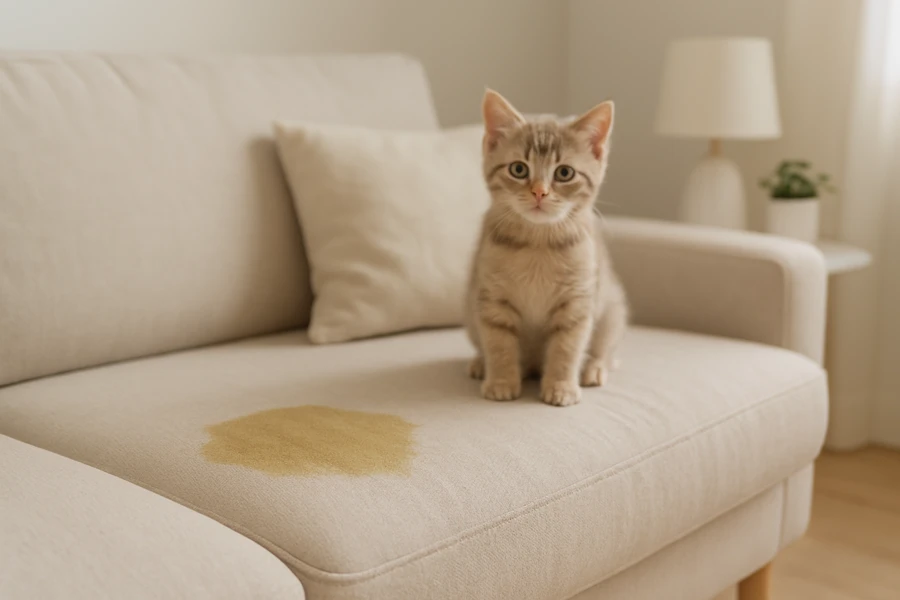
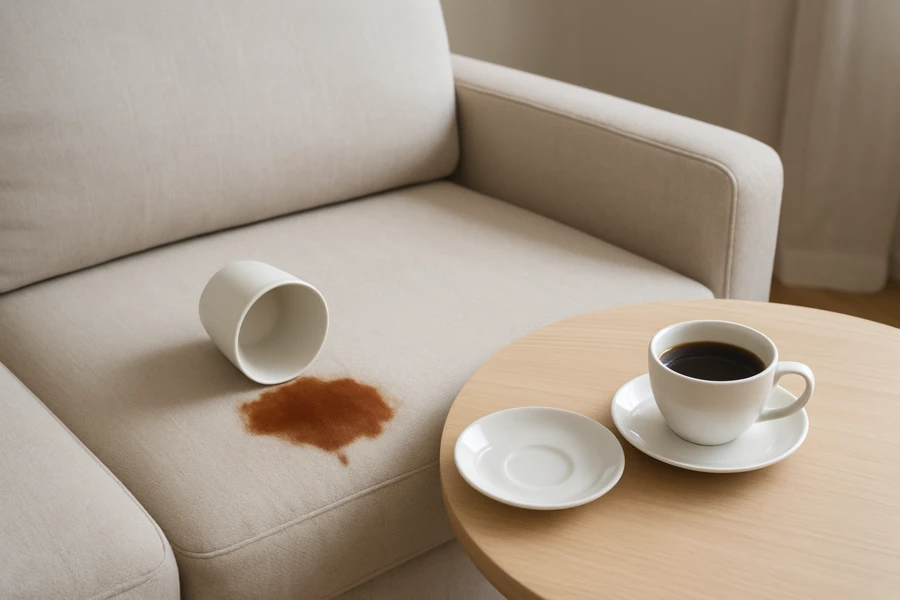
The first minutes after a cat pees on a couch decide whether the stain and odor become a long-term problem or a one-time headache. In my experience, most people panic, scrub randomly, and accidentally set the smell in deeper. I'm going to show you how to get cat pee out of couch fabric the way professional cleaners do it at home, step by step. You'll see how to get cat urine smell out of couch cushions so it doesn't keep resurfacing every time the room warms up, and what to do when “cat peed on couch how to clean” feels like an emergency search rather than a plan.
Why cat urine is so hard to remove from a couch
Cat urine contains uric acid crystals that bond tightly to fabric fibers, which explains why cat urine smells so strong even after surface cleaning. These crystals are insoluble in water, so standard soap and water won't dissolve them. I've seen homeowners scrub for hours only to have the smell return days later.
The porous nature of upholstery makes this worse. When a cat urinates on your couch, the liquid seeps deep into foam cushions and wooden frames. Surface treatments can't reach these layers where bacteria continue breaking down urea into ammonia. This is precisely why cat pee smell is hard to get out of fabric - you're fighting chemistry, not just a stain.
Temperature and humidity reactivate dormant uric acid crystals, which causes the cat urine smell in couch to intensify on humid days or when someone sits on the affected area. The warmth releases trapped ammonia gases, creating that unmistakable sharp odor that seems impossible to eliminate with conventional cleaners.
What to do as soon as your cat pees on the couch
Speed is everything when your cat peed on couch surfaces. I've seen homeowners wait even 10 minutes, and the urine has already soaked deep into the foam, making removal exponentially harder.
Blotting and containing fresh urine on fabric and microfiber
Grab white paper towels or clean rags immediately. Press firmly onto the wet area - don't rub. Rubbing spreads the stain outward and pushes liquid deeper into cushion layers. I replace the towels every few seconds until they come up nearly dry.
For how to get cat pee off couch surfaces effectively, work from the outer edges toward the center. This containment method prevents the stain from expanding across a larger area. On microfiber, use extra pressure; the tight weave holds moisture on the surface longer, giving you a brief advantage.
Never use hot water at this stage. Heat sets urine proteins permanently into fabric fibers. I learned this the hard way on a client's linen sectional.
When and how to remove cushion covers safely
Check for zippers before you start how to clean cat pee from a couch with removable covers. If covers unzip, remove them within the first 5 minutes to prevent seepage into foam.
For non-removable covers, blot through the fabric, then flip the cushion to blot the underside. This draws moisture away from the core. When you wash cat pee out of couch covers, turn them inside out and use cold water only - hot water locks in odor molecules I can still smell weeks later.
Step by step method to get cat pee out of a fabric couch
I've cleaned hundreds of couches over the years, and cat urine is one of the toughest challenges you'll face. The key to how to get cat pee out of fabric couch successfully is acting fast and using the right sequence of steps. Missing even one can leave you with a permanent odor problem.
Checking cleaning codes and testing a hidden area
Before you start, flip your couch cushions and locate the manufacturer's tag. You'll see a cleaning code: W (water-based), S (solvent-based), WS (either), or X (professional only). Using the wrong cleaner can permanently damage your fabric and void warranties.
I always test my cleaning solution on a hidden spot first - usually the back panel or under a cushion. Apply a small amount, wait 10 minutes, and check for color bleeding or texture changes. This simple step has saved me from ruining expensive upholstery more times than I can count. When you're figuring out how to clean a couch with cat pee safely, this precaution is non-negotiable. The same applies when you need to know how to clean sofa with cat pee - test first, clean second.
Using enzymatic cleaner to break down cat urine
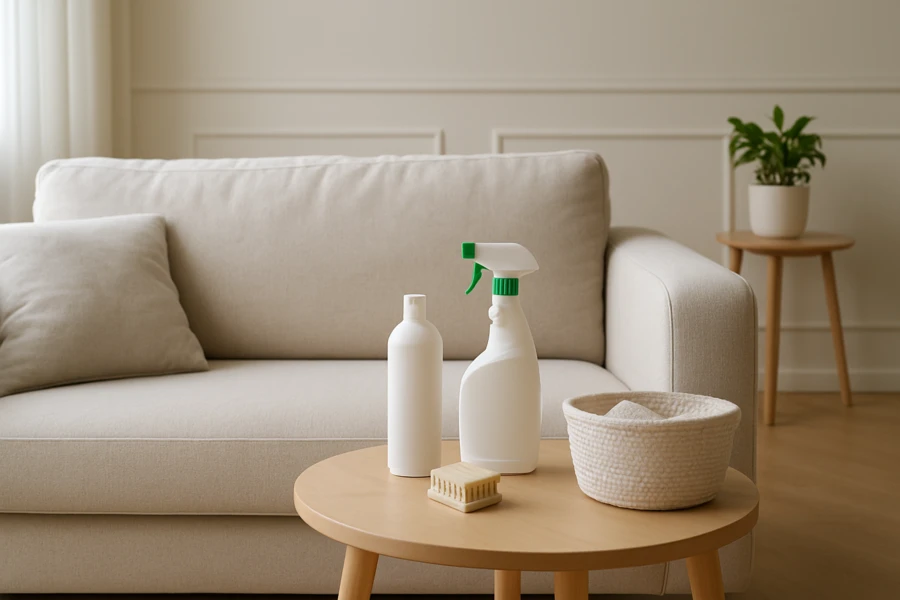
Enzymatic cleaners are the only products that actually break down uric acid crystals in cat urine. Regular soap just masks the smell temporarily.
- Blot up fresh urine with paper towels - press firmly but don't rub
- Saturate the stained area completely with enzymatic cleaner (more is better)
- Let it sit for 15-30 minutes, keeping the area damp
- Blot again with clean towels until barely damp
The enzymes need moisture to work, so don't let the area dry during treatment. This is how to remove cat urine from couch at the molecular level - you're not just cleaning the surface. When learning how to remove cat pee from couch, remember that enzymatic action takes time.
Drying the couch properly to prevent lingering odors
Improper drying is where most people fail. I position a fan directly on the treated area and run it for at least 8-12 hours. Air circulation prevents moisture from soaking deeper into the cushion foam.
If you're dealing with how to get rid of cat pee in couch, consider placing the cushion outdoors in indirect sunlight. UV rays naturally neutralize odor-causing bacteria. For how to get rid of cat pee on couch permanently, you may need to repeat the enzymatic treatment if any smell returns after the first drying cycle. Never use heat sources like hair dryers - they can set the stain permanently.
Check the spot after 24 hours by smelling it closely. If any ammonia scent remains, treat it again before considering the job complete. This is how to clean cat pee out of couch thoroughly. The process for how to clean cat urine from couch demands patience, but cutting corners guarantees failure.
How to get cat urine out of couch cushions and foam
I've tackled countless cat urine incidents on couches, and the key to success is treating both the cover and the foam separately. Cat pee penetrates deep into cushion layers, so surface cleaning won't eliminate the smell.
Removing and treating removable cushion covers
Unzip and remove the cushion covers immediately. I always check the care label first, but most fabric covers can handle a washing machine cycle. Add one cup of white vinegar to the wash along with your regular detergent - this neutralizes the ammonia in cat urine.
For stubborn odors, I soak the covers in a solution of cold water and enzymatic cleaner for 30 minutes before washing. Never use hot water on cat pee stains, as heat sets the proteins and makes the smell permanent. Air-dry the covers completely before reassembling.
Deep cleaning foam cushions soaked with cat urine
Getting cat pee out of foam cushions requires saturation with an enzymatic cleaner. I spray the affected area until the foam is thoroughly wet - matching the depth of urine penetration is critical.
Let the enzyme solution sit for 15-20 minutes, then press out excess liquid using clean towels. Repeat this process twice. For heavily soaked foam, I sometimes submerge the entire cushion in a bathtub filled with cold water and enzymatic cleaner, then squeeze and rinse repeatedly until the water runs clear.
Place the foam in direct sunlight to dry completely - UV rays help eliminate residual bacteria that cause lingering odors.
How to get rid of lingering cat pee smell from your couch
The key to removing cat urine smell from a couch permanently is targeting the uric acid crystals that standard cleaners leave behind. I've seen homeowners scrub for hours only to have the odor return because they never neutralized these stubborn compounds.
Start by saturating the affected area with an enzymatic cleaner specifically designed for pet urine. Press paper towels firmly into the fabric to draw out as much moisture as possible before applying the solution. The enzymes need direct contact with uric acid to break it down completely.
Removing cat urine odor from fabric and cushions
For fresh accidents, blot immediately - never rub. I apply enzymatic cleaner generously, ensuring it penetrates as deeply as the urine traveled. Let it sit for 15-20 minutes, then extract moisture with a wet vacuum or clean towels.
If you're wondering how to get the smell of cat urine out of couch cushions that have removable covers, wash them in cold water with enzyme detergent. Add a cup of white vinegar to the rinse cycle. Air-dry completely before reassembling.
Dealing with old or dried cat urine in a couch
Old cat pee requires rehydration before treatment works. Mix equal parts water and enzymatic cleaner, saturate the stain thoroughly, and cover it with plastic wrap for 24 hours. This softens the crystallized uric acid.
For cleaning dried cat urine from a couch, I often repeat the enzymatic treatment three times over several days. Each application breaks down more residue. A blacklight reveals hidden spots you might have missed during initial cleaning.
How to remove cat spray and general cat smell from a couch
Cat spray differs from regular urine because it contains extra pheromones and oils that cling to fabric fibers. I've found that standard cleaners barely touch these compounds, which is why the smell returns within hours.
Cleaning cat spray on couch surfaces
To clean cat spray off couch effectively, you need an enzymatic cleaner specifically designed for pet odors. These products break down the proteins and oils that cause the smell, rather than just masking it.
Blot the area immediately with paper towels - never rub, as this pushes the spray deeper into the cushion. Saturate the affected zone with enzymatic cleaner until it reaches the same depth as the original spray. Let it sit for 15-20 minutes, then blot again with clean towels.
For stubborn marks, I apply a second treatment after the first dries completely. The key to getting rid of cat spray smell on couch surfaces is patience - rushing the process leaves odor molecules intact.
Freshening a couch that smells like cats
When the entire couch smells like cats but you can't pinpoint fresh spray, sprinkle baking soda liberally over all fabric surfaces. Leave it for 8-12 hours to absorb embedded odors, then vacuum thoroughly using the upholstery attachment.
To remove the smell of cat urine from couch cushions that have been repeatedly marked, remove the covers if possible and wash them with enzymatic detergent. For non-removable upholstery, I use a fabric-safe odor neutralizer spray after the baking soda treatment. Getting cat smell out of couch permanently requires treating both the surface and any padding underneath where urine has seeped.
Products, safety tips, and common mistakes to avoid
I've seen too many couches ruined by well-intentioned cleaning attempts. The wrong product can bleach fabric, lock in odors, or damage foam underneath.
Safe cleaners for different couch fabrics
Enzyme cleaners are my first choice for how to clean cat urine off couch safely - they break down uric acid crystals without harsh chemicals. For microfiber and synthetic fabrics, I use a 1:1 water-to-white-vinegar solution. Is it safe to use vinegar on couch for cat urine? Yes, but only on W-coded or SW-coded fabrics. Never apply vinegar to silk, velvet, or S-coded materials that require solvent-based cleaners.
The best way to clean cat pee from couch starts with checking the care tag. I always test any cleaner on a hidden seam first.
Cleaning errors that can set stains and odors permanently
Rubbing the stain is the biggest mistake when cleaning cat urine from sofa. It pushes urine deeper into cushion foam where enzymes can't reach. Blot only - press firmly with clean towels and lift.
Using hot water or steam cleaners is another common mistake cleaning cat urine from couch. Heat bonds uric acid to fibers permanently. This is exactly why cat pee smell will not go away even after multiple cleanings. I always use cool or lukewarm water and skip the steam setting entirely.
When to call a professional or replace the couch
I've seen homeowners spend weeks fighting a losing battle. If you've treated the same spot three times and the smell returns within 48 hours, the urine has penetrated into the frame or stuffing beyond what home methods can reach. This is when to call professional for cat urine in couch - specialists use injection equipment and industrial enzymes that access deep padding layers.
Structural damage tells you everything. Press firmly on the affected cushion. If the foam crumbles, feels slimy, or the fabric pulls away from seams, the materials have degraded. Multiple accidents in the same furniture piece create ammonia concentrations that break down adhesives and wood.
Knowing when to replace couch after cat pee saves money in the long run. I replace any piece where the wooden frame shows dark staining or warping, or when professional cleaning estimates exceed 60% of the couch's current value. Health comes first - persistent ammonia exposure irritates lungs and triggers allergies.
How to stop your cat peeing on the couch again
I've found that how to prevent cat peeing on couch starts with addressing the root cause. Schedule a vet visit to rule out urinary tract infections or bladder stones - medical issues trigger most inappropriate elimination.
Place enzyme cleaner-treated furniture in a low-traffic area. Cats avoid spots that smell clean to them. Add a litter box near the couch temporarily, then gradually move it to your preferred location.
Understanding how to get cat to stop peeing on couch requires making the furniture unappealing. Cover cushions with aluminum foil or double-sided tape between uses. The texture deters repeat marking while you retrain their bathroom habits.