How to Remove Coffee Stains From a Couch (2026 Guide)
- Check your couch fabric and tag before you start
- What to do right after you spill coffee on your couch
- How to remove fresh coffee stains from a couch
- How to get old or dried coffee stains out of upholstery
- Special care for suede, linen and other delicate couches
- How to remove coffee smell from your couch
- Common mistakes when cleaning coffee from a couch
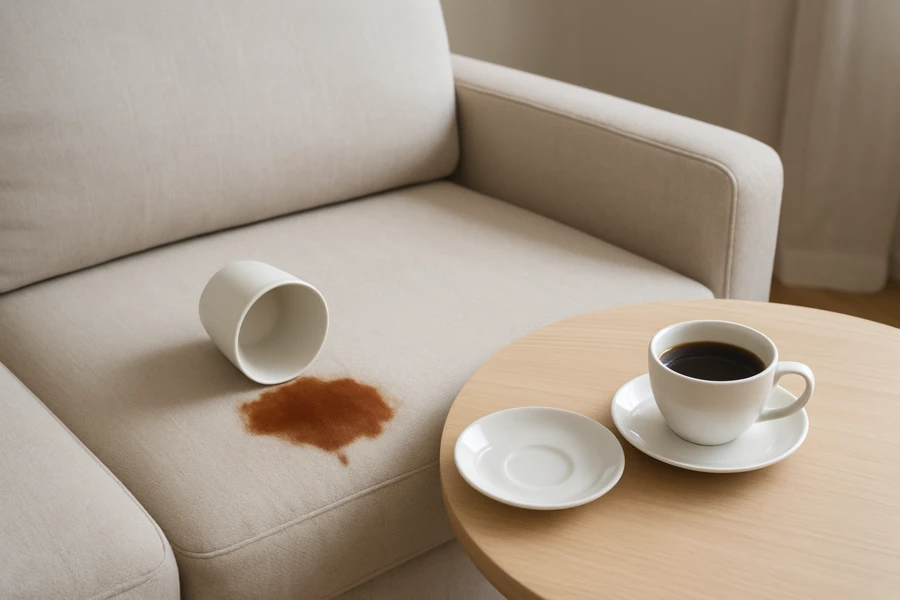
The fastest way to ruin a morning is a fresh coffee spill on couch cushions you actually care about. I've seen people panic, scrub hard, and turn small coffee stains on upholstery into permanent, blurry patches that never quite blend in again. Knowing how to get coffee stains out of a couch starts with slowing down, not scrubbing. I'll walk you through what to do in those first messy seconds, how to get coffee stains out of a couch without spreading them, and how to rescue older, dried marks so the fabric looks and smells clean instead of “spot-treated.”
Check your couch fabric and tag before you start
I always start any stain job by reading the fabric tag, because it quietly tells you how to get coffee out of a fabric couch without damaging the cushions. Those small letters are your roadmap for removing coffee stains from upholstery fabric safely, not a suggestion to ignore.
The mistake I see often is scrubbing first and checking later. Always read the couch cleaning codes before applying any liquid, soap, or cleaner.
Understanding fabric types and cleaning codes
On most tags, you will see sofa fabric care codes like W, S, W/S, or X. W means water-safe upholstery, S means solvent-safe upholstery, W/S allows both, and X means vacuum only.
In my experience, synthetic fibers (like polyester and microfiber) usually handle water-based cleaning better than natural fibers such as linen or some cotton weaves. Match your cleaner to the code to avoid shrinking, water rings, or color loss.
When you should not use water on a coffee stain
A dry-clean-only couch with a coffee stain should never be treated with water-based sprays, dish soap solutions, or steam. Water can cause rings, warping, or even dye bleeding on these fabrics.
With any coffee stain on delicate upholstery, I rely on blotting, gentle vacuuming once dry, and then a professional-grade solvent spotter that matches the care code. If the tag is unreadable and the fabric feels fragile or high-end, skip DIY soaking and call a pro.
What to do right after you spill coffee on your couch
Move fast. The first 60 seconds decide whether you are dealing with a light mark or a permanent shadow.
- Lift, do not wipe. Place a clean, white cloth or paper towel directly on the spill and press straight down. This is the safest start for cleaning spilled coffee on couch fabric without pushing it deeper.
- Work from the outside in. I have found that circling the edge of the puddle with fresh cloth first keeps the coffee from creeping outward, which is key for anyone trying to control a fresh spill on a couch.
- Refresh your cloth often. Once a section looks brown, switch to a clean area so you are not re-depositing coffee while you work on getting it off the upholstery.
- Use only a lightly damp cloth, if needed. A mistake I see often is soaking the area, which spreads the stain and drives it into the padding.
- Stop once the cloth lifts very little color. At this point, you have done the urgent part of dealing with the spill and can move on to targeted stain treatment.
Blotting the spill without spreading the stain
The secret to cleaning coffee off a fabric sofa is controlling moisture and pressure. Too much rubbing frays fibers and leaves a fuzzy ring.
I always start with a folded, absorbent white towel so I can see exactly how much coffee is lifting. Press in short, firm pats, then lift straight up; dragging the cloth is what smears the stain. For delicate upholstery, use your fingertips under the towel to guide pressure and protect the weave while you work.
When the spill reaches cushions and seams
Once coffee seeps into seams, you are no longer dealing with just surface fabric; it is in the padding and stitching. That is where many people struggle with getting stains out of couch cushions.
In my experience, you get the best results by unzipping removable covers immediately and blotting both the cover and the exposed cushion separately. Pay special attention to any coffee spill in couch crevices, gently opening the seam with your fingers and feeding a thin edge of towel inside to soak up hidden liquid before it dries and wicks outward.
How to remove fresh coffee stains from a couch
Blot immediately with a clean, dry cloth; the longer coffee sits, the deeper it moves into the cushion. To handle a fresh coffee stain on a couch properly, always work from the outside of the spill toward the center to avoid spreading the mark.
For anyone wondering how to remove coffee stains from a couch without damaging the fabric, I recommend starting with cool water only, then stepping up to mild cleaners if needed. I have found that the best approach to cleaning these marks is a short series of controlled steps, not aggressive scrubbing.
- Blot up as much liquid as possible with a white cloth or paper towel.
- Dampen a cloth with cool water and keep blotting; avoid soaking the cushion.
- Mix a few drops of mild dish soap in a cup of cool water, then blot the stain lightly.
- Rinse by blotting with plain water to remove soap residue.
- Press a dry towel firmly on the area, then let it air-dry completely.
Gentle cleaning method for most fabric sofas
When removing a coffee stain from sofa fabrics, I always test any solution on a hidden spot first; fabric codes on the tag guide what is safe. A mistake I see often is scrubbing hard, which roughens fibers and can set the mark permanently.
- Mix a small amount of mild dish soap with cool water until slightly sudsy.
- Dip a clean cloth into the suds (not the water), then gently dab the stain.
- Keep blotting with a dry cloth to lift the loosened coffee out of the fibers.
- To clean a coffee stain on couch cushions safely, finish by blotting with plain water to remove soap, then dry thoroughly.
Safe cleaning for white or light colored couches
On pale fabric, coffee stains on a light couch can leave a yellow halo if the area is overwet. I always use lighter, repeated passes instead of one heavy application.
- Blot the fresh spill dry, changing cloth sections frequently.
- Apply a mix of cool water and a drop or two of clear dish soap with a cloth, dabbing gently.
- For anyone trying to get a coffee stain out of a white couch, add one teaspoon of white vinegar to a cup of water and blot lightly if a faint tint remains.
- Rinse by blotting with plain water only, then dry with a towel and allow full air-drying to prevent rings.
How to get old or dried coffee stains out of upholstery
Old coffee marks bond tightly to fibers, so I treat them more like dye than a simple spill. The most effective way I have found to remove old coffee stains from a couch is to work slowly in layers instead of scrubbing hard once.
- Vacuum and dry brush the area to remove crusted coffee and dust so your cleaner can reach the stain.
- Lightly mist with cool water to rehydrate the dried coffee without soaking the cushion through.
- Apply a mild upholstery detergent solution (a few drops of clear dish soap in a cup of cool water) and blot, never rub, pulling color toward the center of the spot.
- Rinse by blotting with plain water to remove soap residue that can attract new dirt.
- Press with a dry white towel under and over the fabric to pull out as much moisture and coffee as possible.
This same pattern works for dried coffee stains on upholstery on armchairs, dining chairs, and sectionals, as long as the fabric is water-safe.
Pre treating set in coffee stains
Set-in spots need extra softening before full cleaning. The secret to getting dried coffee stains out of upholstery is to let moisture and cleaner sit long enough to loosen the residue, but not long enough to soak the cushion core.
- Test a hidden area with your solution to confirm no color loss or ring marks.
- Lay a damp, soapy white cloth over the stain for 5–10 minutes so the fibers slowly release the coffee.
- Lift and blot with a fresh dry towel, checking how much color transfers before repeating.
I have found this approach the most reliable way to remove old coffee stains from upholstery without spreading the mark or damaging delicate fabrics.
When to repeat cleaning or switch methods
A stubborn coffee stain on sofa cushions often fades in stages rather than disappearing in one pass. I tell clients to judge progress by how much lighter the stain looks once the fabric is completely dry, not while it is still damp.
If the coffee stain will not come out of couch fabric after 2–3 careful rounds of the same method, switch tactics instead of scrubbing harder. At that point, I step up to an oxygen-based upholstery-safe cleaner or recommend a professional hot-water extraction, especially on light or delicate textiles where overworking the fibers can cause permanent texture damage.
Special care for suede, linen and other delicate couches
Dry fabrics first, always. Rubbing a wet coffee spill into delicate upholstery drives it deeper into the fibers and can cause permanent rings.
In my experience, harsh scrubbing and strong detergents are the two fastest ways to damage a suede or linen couch while trying to fix a small stain. Work with small amounts of cleaner, light pressure, and plenty of patience.
If you are searching for how to get coffee out of a suede couch or how to get a coffee stain out of a linen couch, test every product on a hidden spot before touching the mark. Stop immediately if you see color transfer, texture change, or excessive fuzzing.
Treating coffee stains on suede and faux suede
A mistake I see often is soaking suede. Never saturate suede or microfiber with water; it hardens the pile and leaves water marks.
For coffee stains on a microfiber couch, dab with a barely damp cloth and blot dry right away with a clean towel. I have found that gentle, repeated blotting is far safer than one aggressive scrub that scars the nap permanently.
Coffee stains on linen and other natural fabrics
Natural fibers tighten and discolor if flooded. Avoid hot water and high-alkaline cleaners on natural-fiber upholstery with coffee stains, as they can set tannin marks.
When planning how to remove coffee stains from a linen sofa, work from the outside of the mark toward the center to keep the stain from spreading into the weave. I always advise clients to keep drying fans or airflow low and indirect, since intense heat can shrink or distort linen.
How to remove coffee smell from your couch
Act fast on coffee odor. The longer it sits, the deeper it settles into the fabric and padding.
-
Blot, do not rub. I always start by blotting any damp area with plain paper towels until no more moisture transfers. Rubbing spreads the coffee and drives the smell deeper.
-
Deodorize with baking soda. For anyone asking how to get coffee smell out of a couch, a generous dusting of dry baking soda over the affected area is my first line of attack. Leave it for at least 4–6 hours, then vacuum thoroughly with an upholstery attachment.
-
Use a vinegar mist for stubborn odor. When clients ask how to remove coffee smell from couch fabric that still lingers, I lightly mist a mix of equal parts white vinegar and water onto the area, then blot again. The vinegar neutralizes odor; the smell of vinegar fades as it dries.
-
Let it air out fully. To get spilled coffee smell out of couch padding, I position a fan to blow across the area until it is completely dry. Odor trapped in damp foam almost always returns, so I never skip this drying step.
Common mistakes when cleaning coffee from a couch
Rushing into scrubbing is one of the biggest couch coffee stain cleaning mistakes I see. Vigorous rubbing drives the spill deeper, increases upholstery stain damage risks, and makes getting rid of a coffee stain on couch fibers much harder for any method.
Using too much liquid is another problem. Over-wetting can soak the cushion core, leading to lingering odors, brown water marks, and even mold. I have found that controlled moisture and blotting outperform heavy soaking every time.
Guessing at fabric type also causes trouble. Ignoring the care tag or using a one-size-fits-all approach often sets the stain permanently instead of lifting it.
Products and tools that can damage upholstery
Never use harsh chemicals without checking the fabric code first. Many unsafe cleaners for couch fabrics strip color, weaken fibers, or leave sticky residues that attract more dirt.
Using bleach on a sofa coffee stain is a mistake I still see in homes. Bleach can yellow light fabrics, create pale rings on dark ones, and degrade delicate upholstery threads even when diluted.
Hard-bristled brushes and abrasive pads also cause damage. They roughen the weave, raise pilling, and can permanently distort textured or velvet-style materials.
When to stop and call a professional cleaner
Stop immediately if color starts transferring heavily onto your cloth. That is a clear sign you have reached the point where DIY stain removal is risky, and a professional upholstery cleaner for coffee stains should take over to prevent bald or patchy areas.
Deep, old stains that reach into the cushions are another red flag. In my experience, repeated home attempts only spread moisture and set the mark, while a pro can extract from within the padding safely.
Delicate, expensive, or “dry-clean only” fabrics should not be experimented on. Calling a specialist early often costs less than repairing or replacing a damaged sofa later.