How To Disinfect A Couch And Keep Your Home Healthier
- When and why you should disinfect your couch
- Safety checks before you start disinfecting
- Step by step to clean and disinfect a fabric couch
- How to disinfect leather and faux leather couches
- How to disinfect special fabrics like microfiber suede and velvet
- Disinfecting throw pillows blankets and other soft furnishings
- How to sanitize a used or secondhand couch safely
- Common mistakes and limits when disinfecting couches
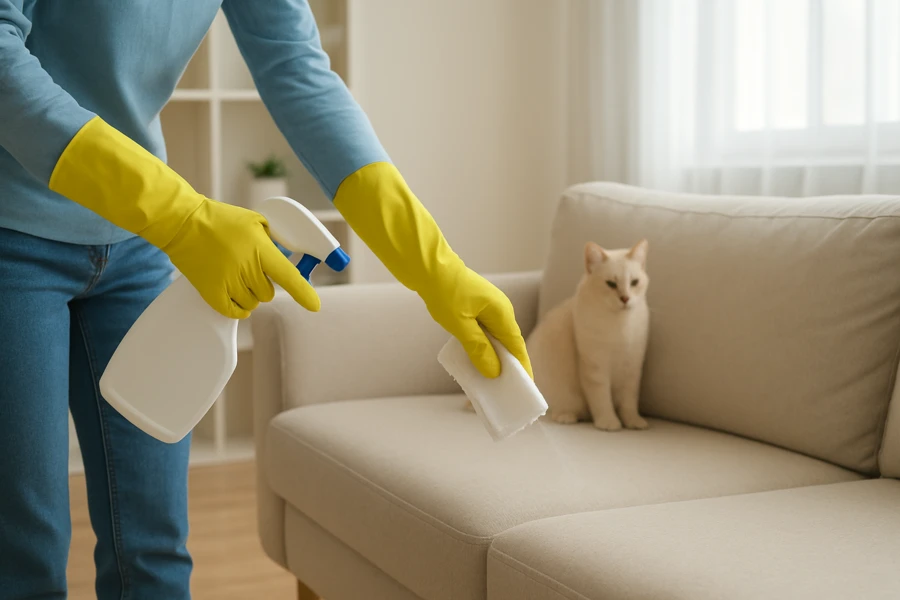
Disinfecting a couch isn't just about stains; it's about cutting down the germs your family sits on every day. In my experience, people ask how to disinfect a couch only after someone gets sick or a strange smell appears. I walk them through how to disinfect your couch step by step, so it feels fresh, safe, and still looks good years later. If you've ever wondered, “how can I disinfect my couch without ruining the fabric or breathing in harsh fumes?”, you're in the right place. You'll see exactly what works, what to avoid, and how to keep your favorite spot on the sofa genuinely cleaner and healthier.
When and why you should disinfect your couch
After any illness in the household, the first soft surface I target is the couch. If you are wondering how to disinfect couch after flu, act within 24 hours of the last symptoms to cut down lingering viruses on fabric and cushions.
High-traffic seating in busy homes also needs regular attention. I have found that homes with kids, pets, or frequent guests benefit from a light disinfecting routine every 1–2 weeks, with deeper work after spills, sneezes, or visible grime.
Understanding how to sanitize your couch matters because upholstery traps more than dust. Body oils, food crumbs, pet dander, and respiratory droplets all settle into the fibers and can keep odors and germs hanging around.
Knowing how to disinfect the couch correctly protects both the fabric and your family. Always test any disinfecting product on a hidden area first to avoid discoloration or damage.
Safety checks before you start disinfecting
Test every disinfectant on a hidden spot first; I have seen too many couches permanently lightened by a single untested spray. Stop immediately if you see color transfer, roughening of the fabric, or a sticky feel after drying.
Before deciding how to disinfect couch naturally or with store products, confirm the fabric type and any protective coatings listed by the manufacturer. Strong solutions that work for how to disinfect couch fabric or how to disinfect upholstery can still damage foam, zippers, or wood frames if they soak through.
Work with windows open and fans running so fumes and moisture do not linger in the room. Never mix disinfectants, especially anything containing bleach or ammonia, as this can create dangerous gases.
Read fabric and cleaning codes on your couch
The cleaning code tag tells you how to disinfect fabric sofa safely; ignoring it is one of the fastest ways to cause fading or shrinkage. W means water-based products are usually fine, S means stick to solvent-based options, WS allows both, and X means vacuum-only with no liquid disinfectants.
For questions about how to disinfect sofa fabric or how to disinfect furniture fabric, I always match the disinfectant to that code first, then adjust strength and contact time. If the code is missing or unreadable, treat the couch as delicate: use very mild solutions, minimal moisture, and extra blotting.
Choose safe disinfecting products for fabrics and finishes
For clients asking how to disinfect my couch without ruining it, I start by separating what is safe for fabric from what belongs only on hard surfaces. Many household sprays labeled as disinfectants are too harsh for dyes, leather trims, or wood feet.
Anyone exploring how to disinfect couch naturally should still treat vinegar, alcohol, and plant-based products with respect, as they can strip color or dull finishes when too strong. Avoid any product that leaves a stiff, crunchy feel on a test patch; long term, that stiffness often means fiber damage, not just residue.
Step by step to clean and disinfect a fabric couch
I always start any job involving how to disinfect fabric couch surfaces by removing as much loose soil and debris as possible. True disinfection only works on a reasonably clean surface, so never skip the prep work.
- Vacuum every surface slowly, including seams, tufting, and under cushions, using a crevice tool.
- Spot clean stains with a fabric-appropriate cleaner, then blot dry so disinfectants are not diluted.
- Check the manufacturer's tag (W, S, W/S, X) before choosing any product for how to sanitize fabric couch fibers safely.
- Remove and treat cushions separately to handle how to disinfect couch cushions thoroughly, including sides and edges.
- For a cloth surface, treat this as how to disinfect a cloth couch and test any product on a hidden area first.
The same approach works for how to disinfect cloth couch materials and how to sanitize couch cushions: clean first, then disinfect.
Prepare and pre clean the couch
For anyone asking how to clean and disinfect a couch effectively, preparation is the professional's shortcut to better results. I have found that a slow, methodical vacuum beats any quick spray-and-wipe routine.
Always unplug nearby electrical items and keep children and pets away before starting wet work.
Apply a fabric safe disinfectant
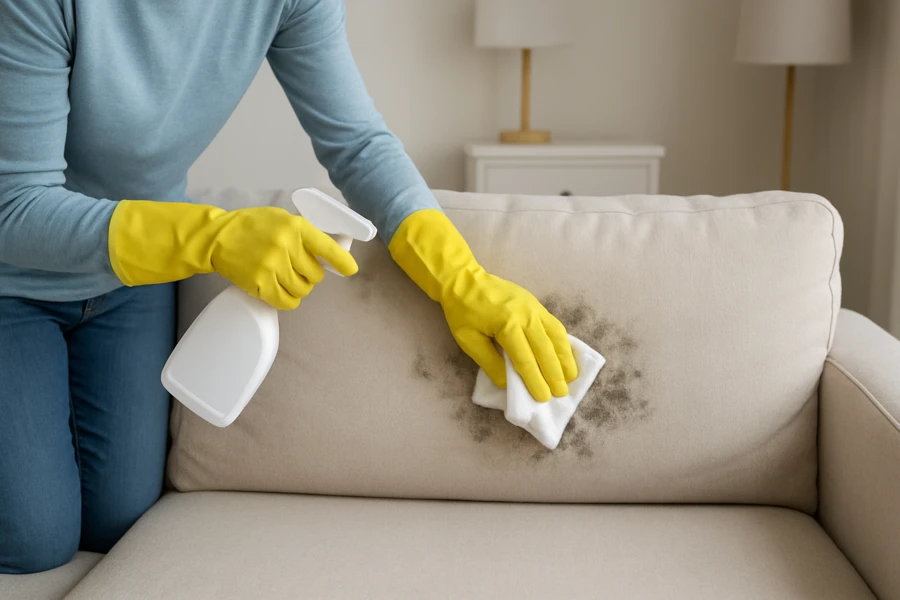
On jobs where clients ask, “how do you disinfect a couch,” I only use products labeled as safe for soft surfaces and follow the exact contact time on the label. A mistake I see often is wiping the fabric too soon, which dramatically reduces germ kill.
When someone asks, “how do I disinfect my couch,” I recommend a fine mist application, never soaking, and working in sections so every area stays visibly damp for the full disinfecting time.
Drying time and airing out the room
Proper drying is the last step in how to disinfect your couch without creating musty odors or mildew. I always open windows or run a fan to move air across the fabric, not directly blasting it in one spot.
Do not sit on or replace blankets and pillows on the couch until it feels completely dry to the touch on all sides.
How to disinfect leather and faux leather couches
Safely disinfect genuine leather
I get asked how to sanitize leather sofa surfaces without damage almost every week. The secret is using a mild, alcohol-free approach that still targets germs.
- Vacuum and dust first so grit does not scratch the leather while you wipe.
- Mix a solution of cool water and a few drops of gentle dish soap, then lightly dampen a clean microfiber cloth.
- Wipe the leather in small sections, never soaking it, paying extra attention to armrests and headrests.
- Disinfect by following with a wipe of a properly diluted, leather-safe disinfectant (check the label for leather compatibility and avoid high alcohol). This answers how to disinfect leather couch surfaces without stripping the finish.
- Dry immediately with a second cloth to prevent water spotting or stiffness.
If someone asks me how do you disinfect a leather couch quickly, I always stress test spots first in a hidden area. A mistake I see often is using straight bleach or strong alcohol that permanently dulls the surface.
Disinfecting faux leather and vinyl
With faux leather, how to disinfect faux leather couch material is more forgiving, but it still needs care. I have found that vinyl tolerates stronger cleaners, yet repeated harsh use can crack the coating.
- Wipe down with a mix of mild soap and warm water to remove body oils and visible soil.
- Apply a disinfectant approved for nonporous surfaces, following the label's contact time so it actually kills germs.
- Finish with a clean damp cloth to remove residue, then dry thoroughly.
For clients asking how to disinfect vinyl upholstery in high-traffic homes, I recommend keeping a ready-to-use spray rated for vinyl and using it after illness or heavy use, not every single day.
Conditioning and aftercare for leather
Anyone learning how to clean and disinfect leather couch surfaces needs to pair disinfection with moisture care. Disinfectants slowly draw oils out of leather.
Condition leather after every few deep disinfection sessions using a product designed for your leather type. In my experience, this keeps the surface supple, prevents cracking, and maintains that soft, low-sheen finish that signals a healthy, well-cared-for couch.
How to disinfect special fabrics like microfiber suede and velvet
The secret with microfiber, suede, and velvet is controlling moisture. These fabrics dislike being soaked, so I always work with light mists and short contact times instead of heavy spraying.
-
Check the cleaning code tag first. For anyone asking how to disinfect microfiber couch surfaces safely, I always start by confirming if the tag says W, S, or W/S. W or W/S usually tolerate water-based disinfecting sprays; S means you must stick with solvent-based or alcohol-based options only.
-
For microfiber, use a fine-mist sprayer with a fabric-safe disinfectant and test a hidden spot. This same cautious approach answers how to sanitize microfiber couch upholstery without leaving rings or stiff patches: apply a light mist, let it sit for the product's labeled dwell time, then gently brush the nap as it dries.
-
For suede and velvet, I treat them like delicate skin. Anyone wondering how to disinfect suede couch or how to disinfect velvet couch surfaces should avoid soaking; a light mist of alcohol-based fabric disinfectant, applied from 8–10 inches away, is usually the safest route.
-
To handle how to sanitize suede couch and how to sanitize velvet couch materials, I let the fabric dry fully in moving air, then restore texture with a soft upholstery brush. Never use steam on real suede or non-performance velvet; high heat can permanently flatten or harden the pile.
Disinfecting throw pillows blankets and other soft furnishings
Start by checking care labels, because the safest way to disinfect soft furnishings depends on the fabric and filling. I always separate washable items from those that can only be spot-cleaned or surface-treated.
For anyone asking how to disinfect couch pillows or how to sanitize couch pillows, washable covers are your friend. Remove covers, wash on the warmest safe setting with a quality detergent, then dry completely on medium or high heat to help kill germs.
For how to sanitize throw pillows that cannot be stripped or machine washed, I rely on a two-step approach. First, vacuum slowly with an upholstery attachment to remove dust and dander. Then lightly mist with a fabric-safe disinfectant spray, keeping the pillow just damp, never soaked, and allow it to air-dry in a well-ventilated area.
Knowing how to disinfect blankets without washing is useful for large or delicate pieces. I recommend thorough shaking outdoors, a careful vacuum with a clean upholstery tool, then applying a light, even mist of fabric-safe sanitizing spray and hanging the blanket to dry fully before using or folding it again.
How to sanitize a used or secondhand couch safely
Initial inspection and when to avoid a used couch
I always start any job involving how to sanitize a used couch with a hard, honest inspection under bright light. Peel back cushions, check seams and underside fabric for live bugs, black specks, musty odors, or unexplained stains that look like old bodily fluids.
Walk away immediately from any secondhand piece with signs of bed bugs, active mold, or strong urine smell; no method for how to disinfect a used couch will make those safe for home use. For pieces that pass this check, photograph existing damage so you can monitor whether spots spread after cleaning and disinfection.
Deep cleaning and disinfection for secondhand furniture
For clients asking how to clean and sanitize a used couch effectively, I always start with dry work: vacuum every surface slowly using a crevice tool, then vacuum the frame, underside, and zipper areas. This removes hidden grit and allergens so your disinfectant can actually contact the fabric.
- Check the manufacturer tag for cleaning codes (W, S, WS, X) and choose products that match, then test in a hidden area.
- Clean fabric with a mild upholstery cleaner or a mix of water and a small amount of gentle detergent, working in small sections and blotting, not soaking.
- Apply a fabric-safe disinfectant rated for soft surfaces, following the label's contact time; that step is the real answer to how to disinfect used couch safely.
- Let the couch dry completely with strong airflow before use; slightly propping cushions on their sides speeds drying and prevents musty odors.
Used pieces that are leather or faux leather follow the same logic for how to disinfect a used couch, but I swap harsh sprays for leather-safe cleaners and alcohol-based wipes on high-touch areas like arms and headrests. If you ever feel unsure about how to clean and sanitize couch materials that are delicate or vintage, professional upholstery cleaning is often cheaper than replacing the entire piece.
Common mistakes and limits when disinfecting couches
I see many people focus only on smell and stains and ignore what actually kills germs. The biggest mistake is guessing how to disinfect upholstery without checking the product label for fabric compatibility and required contact time.
Another common issue is over-wetting the cushions while trying to learn how to sanitize upholstery, which drives moisture and bacteria deeper into the foam. I have found that home methods for how to sanitize a cloth couch often miss hidden areas like creases, buttons, and seams, where body oils and microbes build up fastest.
Professional secret: No household method reaches deep inside dense cushions; surface disinfection has limits. For allergy sufferers or after illness, treat couch disinfection as one layer of a broader cleaning and hygiene routine, not a complete solution on its own.
Products and methods that can damage upholstery
A mistake I see often is using straight bleach while trying to figure out how to disinfect upholstered furniture; it can strip color, weaken fibers, and leave brittle patches that tear. Alcohol-heavy sprays used aggressively on how to disinfect an upholstered couch may stiffen certain synthetics and cause cracking over time.
Always test in a hidden spot first before using any new disinfectant on fabric. Scrubbing too hard with stiff brushes, steam on delicate fabrics, or mixing products can do more harm than good, even if the couch looks cleaner at first glance.
When to call a professional upholstery cleaner
Odors that return quickly, repeated illness in the household, or mystery stains are signs you need expert help with how to sanitize upholstered furniture. I recommend calling a pro if you see water rings, dye bleeding, or shrinking after a DIY attempt at how to disinfect upholstered chairs.
Call a professional immediately after sewage backups, heavy pet accidents, or serious illness on the couch; home products are not designed for that level of contamination. A qualified upholstery cleaner has tools and disinfectants that reach deeper than any routine home method for how to disinfect upholstery, while protecting the fabric's color and structure.