How To Get Red Wine Out of Couch Without Ruining It
- Check your couch fabric before you start
- Act fast when the red wine is still wet
- Remove dried or old red wine stains from a couch
- Use common household products to treat wine stains
- Special instructions for different couch materials
- Avoid these common mistakes when cleaning wine off a couch
- When the stain or smell will not go away
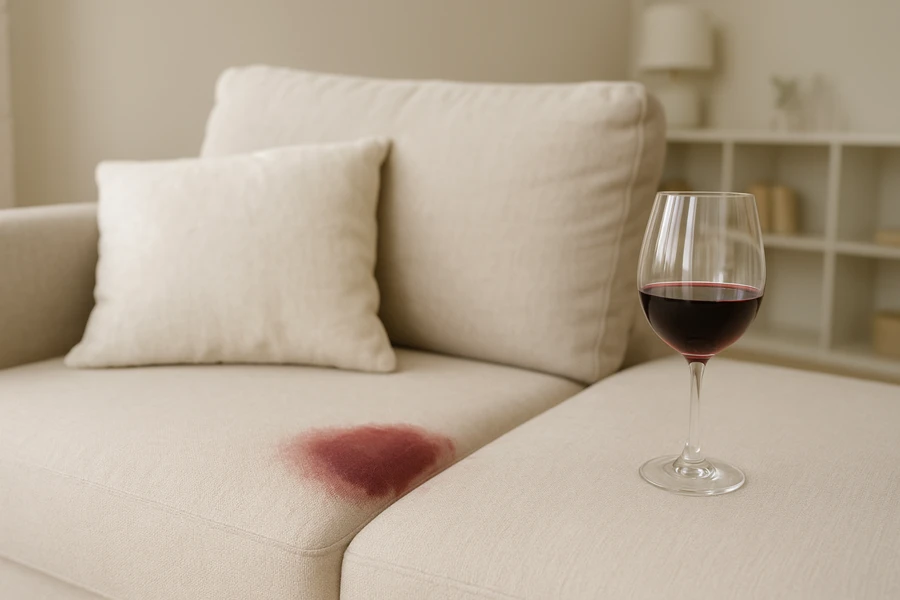
The fastest way to save a couch from a red wine disaster is to act before the stain sets, not to panic or start scrubbing. I'm asked about how to get red wine out of couch upholstery more than almost any other stain question, and I've seen both spotless saves and permanent damage from a single wrong move. A red wine spill on sofa fabric doesn't have to mean a ruined living room; with the right steps, you can remove red wine stain from upholstery so it's barely noticeable, if at all. I'll walk you through what to do immediately, what still works later, and how to choose the safest method for your specific couch so you feel confident, not frantic, the next time a glass tips.
Check your couch fabric before you start
Before deciding how to get red wine out of fabric couch cushions or armrests, confirm exactly what you are working on. I have seen more damage from the wrong cleaner than from the original spill.
The safest way to choose a method for how to get red wine out of upholstery fabric is to match your approach to the fabric type and its care instructions. That same rule applies to how to get red wine out of sofa fabric, especially on delicate or textured weaves that can shrink, fade, or develop rings.
Identify fabric type and cleaning codes
The small label with cleaning codes on couch tags tells you far more than most people realize. It usually shows letters like W, S, W/S, or X, and those letters should dictate every product you use.
W means water safe upholstery, so carefully applied water-based cleaners are usually acceptable. S means solvent only upholstery, so avoid water-based stain removers and use a dedicated solvent spot cleaner instead. W/S allows either water-based or solvent cleaners, while X means no home wet cleaning at all, only vacuuming.
When to avoid DIY and call a professional
Call professional upholstery cleaning if the tag shows X, if the fabric is vintage or silk, or if the stain covers a large, central area. I have found that dark, tightly woven fabrics and expensive sectionals are common cases of when not to clean couch yourself, because any ring, bleach spot, or texture change will be obvious.
When you feel unsure about the fabric or see color transferring to your cloth immediately, stop and call a pro. That pause often saves the couch and keeps a simple red wine spill from turning into permanent damage.
Act fast when the red wine is still wet
The first 2–3 minutes decide how to remove red wine from couch fabric without a permanent shadow. I always tell clients to pause, breathe, and work methodically instead of smearing the stain in a panic.
Follow this sequence for how to get wine out of couch cushions before it sets:
- Lift any excess liquid by gently scooping with a spoon or edge of a card so it does not sink deeper into the fibers.
- Blot with a clean, white cloth or paper towel, working from the outside of the spill toward the center to keep it contained.
- Switch to a fresh section of cloth as soon as it becomes pink so you keep pulling wine out instead of pressing it back in.
- Continue blotting until no more color transfers; at this stage you have the best base for how to clean red wine off couch fabric with minimal residue.
Blot the spill without spreading it
To blot red wine stain couch surfaces correctly, press straight down; do not drag the cloth sideways. I have found that a stacked, folded towel under the cushion can stop the wine from traveling deeper.
Always do not rub wine stain into the fabric. Rubbing frays fibers, enlarges the mark, and often pushes the red dye into the backing where it becomes almost impossible to reach later.
Use water and mild detergent safely
Once the stain is mostly blotted, you can clean red wine from couch fabric with dish soap mixed in cool water. I use about a teaspoon of mild, clear dish liquid in a cup of water for how to clean wine from couch upholstery without leaving a sticky film.
- Test the solution on a hidden area of the sofa to check for color change or damage.
- Lightly dampen a cloth with the soapy water, then dab the stain; never soak the cushion, as too much moisture can cause rings and odors.
- Work patiently, reapplying the solution to your cloth instead of pouring it directly on the fabric.
Rinse and dry to prevent water marks
After detergent use, I always do a gentle rinse step to dry couch after cleaning without leaving residue. A mistake I see often is skipping this, which can leave dull, sticky patches.
- Wipe the area with a clean cloth lightly dampened with plain water to remove soap.
- Blot with a dry towel to pull out as much moisture as possible.
- To prevent water rings on sofa fabric, feather your damp wiping a little beyond the treated spot so the drying edge is soft, not sharply defined.
- Allow the area to air dry completely, using a fan on low if needed, before sitting on the cushion.
Remove dried or old red wine stains from a couch
Old wine on fabric behaves differently from a fresh spill, so the method for how to get dried red wine out of couch cushions must be gentler and slower. I have found that rushing in with harsh products often drives pigment deeper into the fibers.
To handle how to remove dried red wine stains from upholstery properly, work in stages: soften, lift, then rinse. This same mindset applies to how to get out red wine stains from upholstery on chairs, ottomans, and other padded furniture.
Rehydrate the stain before cleaning
- Lightly mist the stain with cool water using a spray bottle until the fabric feels damp, not soaked. This starts to rehydrate old wine stains so they release instead of cracking and setting deeper.
- Press a clean white cloth onto the area and blot repeatedly. I treat set in red wine on couch fabric this way to pull dissolved dye up without spreading it sideways.
- Add a few drops of mild dish soap to a cup of cool water and dab this solution onto the stain, then blot again. Stop and let the area air-dry slightly if the fabric begins to feel soggy.
Use stain removers safely on upholstery
- Test any upholstery stain remover red wine product on a hidden spot first. I always watch for color change or roughening of the fibers before going near the visible stain.
- Apply the remover with a cloth, never directly from the bottle, and work from the outside edge of the stain toward the center. This keeps the product controlled as you remove red wine stain from upholstery panels and seams.
- Blot thoroughly with a damp cloth to remove product residue, then blot again with a dry towel. Never leave chemical residue in the fabric, as it can attract new dirt or weaken delicate upholstery over time.
Use common household products to treat wine stains
I have found that the fastest way to get results with home remedies for red wine stain on couch fabric is to act before the spill dries. Blot firmly with a clean cloth, then choose one targeted method rather than throwing every product you own at the stain.
If you want to know how to get red wine out of couch baking soda solutions work best on fresh, damp stains, while dish soap and vinegar mixes perform better on slightly set spots. Always test any remedy on a hidden area first to check for color change or fabric damage.
Baking soda and salt for lifting wine from fabric
For baking soda red wine couch treatments, I rely on a simple paste: equal parts baking soda and cool water spread over the damp, blotted stain. The secret to lifting this stain is letting the paste dry fully, then vacuuming so the powder pulls pigment up and out of the fibers.
Sprinkling dry salt on red wine stain patches right after a spill also helps; salt draws liquid away from the fabric before it can set. Do not rub the salt in, just pour generously, let it absorb, then vacuum or gently lift it away.
Dish soap and vinegar solutions
For a reliable homemade red wine stain remover for couch upholstery, I mix one cup of cool water with a teaspoon of dish soap and a teaspoon of white vinegar. This vinegar dish soap red wine stain solution breaks down both the color and the sticky residue that helps the stain cling to fibers.
I apply it with a clean cloth, working from the outside of the stain inward to avoid spreading. Once the color fades, I follow with plain water on a fresh cloth to rinse, then blot dry with a towel.
What not to mix or apply on upholstery
Never guess with cleaning products to avoid on couch fabrics; some cause permanent damage in seconds. I see many cushions ruined by straight bleach, strong oven cleaners, or undiluted hydrogen peroxide on colored fabric.
Dangerous cleaning mixtures include combining bleach with vinegar or ammonia-based products, which can release toxic fumes. I also avoid hot water on red wine, since heat can set the stain, and I skip abrasive powders that scratch delicate upholstery weaves.
Special instructions for different couch materials
Speed matters more than any product. The secret to how to get red wine out of fabric couch, leather, suede, or linen is fast blotting and using the gentlest effective method for that specific material.
Fabric and microfiber couches
For how to get red wine out of couch cushion, I always remove the cover first if it is zippered and machine-washable. Check the care label before doing anything with water or cleaner.
- Blot the spill with plain white paper towels until almost dry. Do not rub; that drives pigment deeper into the cushion.
- Mix a small bowl of cool water with a drop of clear dish soap. Work on how to get red wine out of cushion by dabbing from the outside of the stain inward.
- Rinse by blotting with a cloth dampened in plain water, then press with a dry towel to pull moisture out of the foam.
- For how to get red wine out of chair fabric, repeat the same steps and finish with a light pass of an upholstery-safe stain remover if any pink hue remains.
Always test any cleaner on a hidden area of fabric first to avoid ring marks or fading.
Leather and faux leather couches
For how to get red wine out of leather couch, I rely on dilution and conditioning rather than harsh scrubbing. Leather coatings are sensitive and can dry or crack quickly.
- Blot immediately with a soft, lint-free cloth. Keep the cloth moving so you do not smear the stain.
- Dampen a new cloth with cool water and a tiny drop of mild soap. For how to get wine out of leather, wipe lightly, never soaking the surface.
- Wipe again with a clean, barely damp cloth to remove soap residue.
- For how to get wine stain out of leather, finish with a leather conditioner once dry to prevent stiff spots or dull patches.
Never use alcohol, bleach, or abrasive powders on leather or faux leather; they strip finish fast.
Suede and delicate natural fabrics
For how to get red wine out of suede couch, dry methods are safer than wet ones. Water marks suede easily and can create permanent dark patches.
- Blot with a dry white cloth, pressing straight down. Do not wipe or you will crush the nap.
- Lightly sprinkle cornstarch or talc over the damp area and leave for several hours so it can pull out moisture and color.
- Brush gently with a suede brush to lift the nap once the powder is removed.
For how to get red wine out of linen couch, I use a very weak mix of cool water and mild detergent, dab only, then blot dry aggressively so the loose weave does not stretch or distort.
On suede or linen, if a dark shadow remains after one careful attempt, stop and call a professional cleaner to avoid texture damage.
White and light colored couches
With how to get red wine out of a white couch, the stain shows every mistake, so over-scrubbing is the enemy. Gentle repetition works better than strong chemicals.
- Blot thoroughly, then clean using the method for your specific material above.
- For how to get red wine out of white couch, follow with a fabric-safe oxygen-based stain remover, dabbed on and blotted off, not rubbed in.
- When planning how to get wine out of white couch, always avoid chlorine bleach unless the care label explicitly allows it, as it can yellow fabric or weaken fibers.
Always compare the cleaned area to a clean section in good light; slight pink or yellow tones are easier to correct while still fresh.
Avoid these common mistakes when cleaning wine off a couch
People asking how to get red wine off couch fabrics often ruin the fibers before they touch the stain remover. I have found that most red wine stain cleaning mistakes come from rushing and using the wrong products, not from the stain itself.
The biggest difference between success and failure in how to get wine off couch cushions is how gently you treat the fabric and how carefully you choose and test your cleaner.
Rubbing, scrubbing and overwetting the fabric
A mistake I see often is aggressive scrubbing that shreds fibers and pushes pigment deeper. Do not scrub wine stain on couch fabric; blot with light pressure instead.
Another problem is overwetting the area. Always avoid soaking upholstery so moisture does not seep into the cushion core and cause lingering odors or water rings.
Using bleach and harsh chemicals
Using strong products out of panic creates permanent marks. Bleach on couch risks include fiber weakening, patchy fading, and yellow halos that no professional can fully reverse.
I also see damage from strong cleaners on sofa arms and headrests where skin oils already stress the fabric. Mild, fabric-safe products keep both the stain and the textile under control.
Skipping patch tests and fabric checks
Rushing straight in with a cleaner is one of the most expensive red wine stain cleaning mistakes. Always test cleaner on hidden area first so you can spot any texture change or dye bleed.
Checking the care tag and testing quietly under a cushion helps prevent discoloration on couch seams and cushions that are hard to hide. One minute of testing can save an entire upholstery set.
When the stain or smell will not go away
Persistent odour usually means wine has soaked into the padding, not just the fabric. In my experience, anyone asking how to get wine smell out of couch cushions has a deeper issue than surface cleaning alone.
A stubborn red wine stain on sofa fabric or a lingering scent after drying tells you the first treatment was not enough. I have found that a second, carefully targeted clean is safer than scrubbing harder and damaging the fibres.
White wine can be just as sneaky. People often ask how to get white wine smell out of couch cushions because they assumed a pale drink could not cause trouble and skipped any real cleaning.
Dealing with lingering wine odours
To remove wine smell from upholstery properly, you need true odour neutralisation, not just fragrance. Lightly misting an enzymatic cleaner into the affected area works far better than spraying air freshener over the top.
To neutralise wine odour on couch padding, I gently lift the fabric if possible and treat from the side or underside. Always test any odour product on a hidden patch first to avoid discolouration.
Recognising permanent staining and fabric limits
Knowing when red wine stain is permanent prevents you from overworking the fabric. If you see fuzzy texture, shine changes, or upholstery colour loss after stain treatment, the dye or fibres themselves have been altered.
Stop aggressive scrubbing as soon as you notice light patches or roughness. At that point, further rubbing usually enlarges the damaged area instead of improving the mark.
Choosing professional upholstery cleaning
I recommend learning when to call upholstery cleaner for wine stain rather than making a bad situation worse. Deep-set odour, large spills, or high-value fabrics like linen and velvet justify professional tools and training.
Professional vs DIY stain removal is not just about convenience; it is about risk. A pro can flush backing and foam safely, while home attempts often push wine deeper or cause shrinkage and water rings.