How To Clean Mattress Properly Remove Stains And Keep It Fresh
- When and why you should clean your mattress
- Essential supplies and safety checks before cleaning
- Step by step routine to clean your mattress at home
- How to remove common mattress stains
- How to handle a wet or used mattress safely
- Common mattress cleaning mistakes to avoid
- How to keep your mattress cleaner for longer
The fastest way to ruin a good night's sleep is a mattress that smells, looks stained, or triggers allergies. Learning how to clean mattress properly isn't fancy housekeeping; it's basic hygiene and it dramatically extends its life. In my experience, most people only start asking how to clean your mattress after a spill or accident, when a simple routine could have prevented the mess from setting in. I'll walk you through how to clean bed mattress surfaces so they're fresher, safer, and actually comfortable again, using methods that work even if you're figuring out how to clean mattress at home for the first time.
When and why you should clean your mattress
I have found that most people wait far too long before thinking about how often to clean mattress surfaces. As a rule of thumb, I recommend a light refresh every month, a deeper vacuum and spot treatment every three months, and a thorough clean at least twice a year, or more often if you have allergies, pets, or night sweats.
Dust mites, sweat salts, shed skin, and skin oils build up inside the mattress long before you see stains or smell odours. That buildup is the real answer to why clean mattress fabric regularly, not just when there is a spill. Regular attention keeps allergens down, reduces musty smells, and extends the life of the materials.
The best mattress cleaning tips always start with prevention: use a washable protector, rotate the mattress on schedule, and deal with spills the same day so they never have a chance to set deep into the layers.
Essential supplies and safety checks before cleaning
Dry tools protect your mattress better than wet ones. I always start with a strong vacuum, a white cloth or paper towels, a gentle enzyme cleaner, baking soda, and a small soft-bristle brush for precise work.
Always check mattress care label instructions before spraying or scrubbing anything. That tag tells you whether water-based cleaners, solvents, or only dry methods are safe, which is the core of mattress cleaning safety. A mistake I see often is using steam or soaking the surface, which pushes stains and moisture deeper.
For clean mattress stain tips, I rely on the same rule every time: treat small, work inwards, and blot instead of rub. Strong fragrances and colored cleaners can leave new marks, so I prefer fragrance-free, clear products. Open a window or use a fan whenever you use any cleaner to avoid breathing in concentrated fumes.
What to know about memory foam and Tempur-Pedic mattresses
Memory foam soaks up liquid like a sponge, so cleaning memory foam mattress safety is all about control. I only ever use lightly damp cloths and avoid pouring cleaner directly on the surface.
For how to clean Tempurpedic mattress models, I follow the manufacturer's rule: no steam, no heavy scrubbing, and no harsh solvents. Lightly mist a suitable cleaner onto a cloth, blot the area, then let it air-dry completely before putting bedding back on.
With how to clean Casper mattress surfaces, I have found that quick action on spills and generous drying time prevent permanent odors. Never stand or kneel on a soaked spot to “press it dry” on any foam mattress, as this can tear the internal structure and spread the stain deeper.
Step by step routine to clean your mattress at home
I always treat mattress cleaning like a mini deep-clean project, even if you are just trying to figure out how to clean mattress at home between sheet changes. A mistake I see often is people cleaning only the top fabric and ignoring sweat and dust build-up deeper inside.
-
Strip and assess. Remove all bedding and inspect for stains, odors, and worn areas. This quick check tells you how to clean your mattress at home most efficiently, instead of scrubbing blindly.
-
Vacuum thoroughly. Use a clean upholstery attachment and go slowly over the entire surface, seams, and sides. In my experience, this first pass removes most of the debris before you deep clean the bed mattress at home.
-
Spot-treat stains only. Lightly apply a fabric-safe cleaner to stains and blot, never soak. Over-wetting is the fastest way to cause lingering odors and can make how to clean bed mattress at home feel impossible later.
-
Deodorize and dry. Sprinkle baking soda, let it sit for at least an hour, then vacuum again. For anyone asking how do you deep clean a mattress without special tools, extended drying time and good airflow are non‑negotiable.
-
Protect before remaking. Add a waterproof, breathable protector so the next time you wonder how to clean your mattress at home, you are mostly washing the cover, not the mattress core.
How to deep clean a mattress with a carpet cleaner
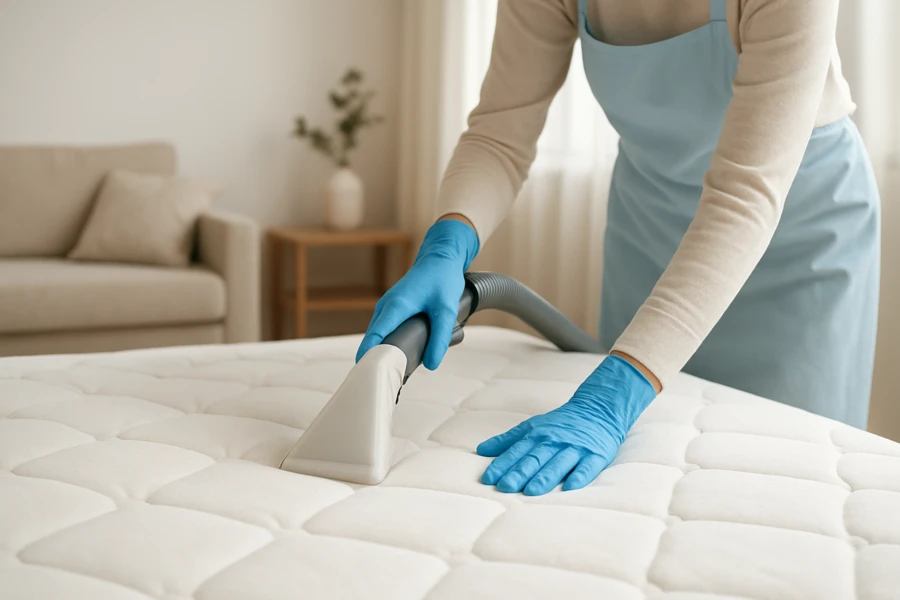
I only recommend using a carpet cleaner on mattress surfaces that are clearly labeled as safe for light wet cleaning. The secret is to treat it as a low-moisture upholstery job, not a soaked carpet.
-
Check labels and pre-vacuum. Confirm water-safe care instructions, then vacuum thoroughly. Many people jump straight into how to clean a mattress with a carpet cleaner and end up forcing dirt deeper into the foam.
-
Use the upholstery tool on the lowest setting. Fill the tank with a mild, low-foam solution and cool to lukewarm water. For how to clean mattress with carpet cleaner safely, apply as little liquid as possible and make extra dry passes.
-
Work in small sections. I move in overlapping lines, immediately extracting after each pass. This method is how to deep clean a mattress with carpet cleaner without leaving wet pockets that can sour later.
-
Dry completely. Never sleep on a damp mattress. Use fans, open windows, and allow several hours until it feels bone-dry to the touch on every side.
How to clean a pillow top or plush mattress
Pillow tops need a gentler approach; aggressive scrubbing collapses the loft and leaves the surface lumpy. I always focus on suction and light surface work instead of heavy moisture.
-
Vacuum with a soft brush. For how to clean a pillow top mattress properly, use a soft upholstery brush and very light pressure so you do not mat down the cushioning.
-
Spot clean, never saturate. Apply a small amount of fabric-safe cleaner to a cloth, then blot the stain. This is also how to clean soft top mattress designs without driving liquid into the comfort layers.
-
Deodorize gently. Sprinkle a thin layer of baking soda, let it sit, then vacuum with the brush tool again. Avoid steam or heavy wet cleaning on plush surfaces, as it can warp fibers and shorten the mattress lifespan.
How to remove common mattress stains
I always start stain work by blotting, not scrubbing. To handle how to clean mattress stains effectively, work on small sections and keep the mattress as dry as possible to protect the inner padding.
For anyone asking how to get stains out of mattress surfaces in general, I rely on three basics: a mild cleaner, plenty of clean cloths, and patience. The secret to how to clean stains out of mattress fabric is repeated light applications, not one aggressive scrub.
A mistake I see often is soaking the bed. If you are unsure how to clean stains off mattress panels, apply cleaner to the cloth, not directly to the mattress, to avoid deep moisture and mildew.
How to get sweat and yellow stains out of a mattress
For how to get sweat stains out of mattress fabric, I use a mix of water and a small amount of mild detergent, dabbed on with a cloth. I have found that a light pass with an enzyme spray helps break down the sweat residue without harsh bleaching.
Anyone wondering how to clean sweat stains from mattress ticking should work in thin layers, blotting dry after each pass. For how to get yellow stains out of mattress tops, a gentle oxygen-based stain remover, used sparingly, usually lifts the discoloration without damaging the fibers.
How to get blood stains out of a mattress
The secret to how to clean blood off mattress fabric is cold water only; warm or hot water sets the protein. I start with a cold, damp cloth and dab from the outside of the blood spot inward to avoid spreading.
For how to get old blood stains out of mattress padding, I apply a small amount of enzyme cleaner, let it sit for several minutes, then blot thoroughly. Always test any product on a hidden area first to avoid color damage.
How to get urine and pee stains out of a mattress
To tackle how to get urine stains out of a mattress, I immediately absorb as much liquid as possible with dry towels, pressing firmly. I then use an enzyme cleaner designed for pet or human accidents, which in my experience works better than perfume-heavy sprays.
Anyone struggling with how to get pee stain out of mattress surfaces should focus on odor as much as appearance. After enzyme treatment, I let the area dry completely, then lightly vacuum to remove any residue from the surface.
Dealing with old and set in mattress stains
For how to get old stains out of mattress fabric, I manage expectations first; some discoloration will fade but not vanish. I rehydrate the stain slightly with a damp cloth, then apply an enzyme or oxygen cleaner and let it work longer than for fresh spots.
When deciding how to clean old mattress stains, I avoid strong solvents that can damage foams or fire barriers. If a stain resists gentle methods after several attempts, stop rather than scrubbing harder, as aggressive treatment often harms the mattress more than the stain itself.
How to handle a wet or used mattress safely
Always treat a wet or used mattress as a hygiene risk until cleaned and dried properly. I have found that people underestimate how quickly moisture leads to mold, odors, and dust mites, damaging mattress hygiene and your health.
For any spill or leak, start by removing all bedding and isolating the mattress from other furniture and fabrics. Avoid lying or sitting on it until you have followed a full process for how to clean a wet mattress, including deep drying. With secondhand beds, I always advise a thorough routine for how to clean a used mattress before bringing it into the bedroom, to reduce exposure to body fluids, allergens, and bed bugs.
Common mattress cleaning mistakes to avoid
In my experience, most mattress cleaning mistakes come from using too much liquid. Mattresses trap moisture, so heavy soaking leads to mildew, odors, and even sagging.
A mistake I see often is scrubbing stains aggressively. That only drives spills deeper into the padding and spreads the mark. Instead, follow clean mattress stain tips that focus on blotting and gentle dabbing, not rubbing.
Using all-purpose cleaners or bleach directly on the fabric is another problem. These can damage fibers, strip protective finishes, and leave harsh fumes right where you sleep.
Always test any cleaner on a small hidden area first and keep the mattress as dry as possible to avoid long-term damage.
How to keep your mattress cleaner for longer
I have found that the best mattress cleaning tips start with prevention, not reaction. Use a waterproof, breathable mattress protector and wash it every 2–4 weeks to prevent mattress stains from sweat, spills, and body oils.
Air the bed daily by folding back the duvet for at least 20 minutes; this lets moisture evaporate and slows odor and mold growth. Vacuum the surface and seams every month using the upholstery tool to remove dust, skin flakes, and allergens before they settle deep into the foam.
To truly know how to clean your bed for the long term, treat small spills immediately with a lightly damp cloth and mild detergent, never soaking the mattress. Avoid harsh bleach or soaking, as both can damage fillings and encourage hidden mold.