How To Clean Leather Couch And Keep It Looking New
- Understand your leather type before you start
- Prepare your leather couch for cleaning
- Step by step routine cleaning for a leather couch
- Natural and DIY ways to clean a leather couch
- Deep cleaning and restoring very dirty or old leather couches
- Conditioning and protecting your leather couch
- Special care for white, cream and light leather couches
- Common leather cleaning mistakes and safety risks
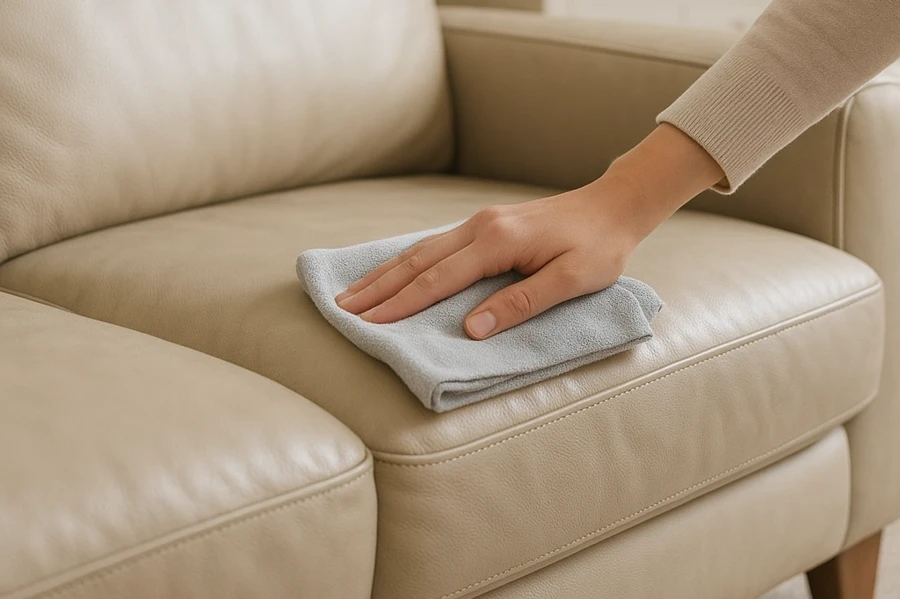
The fastest way to ruin a leather couch is scrubbing it like fabric and hoping for the best. In my work, I've seen beautiful sofas dry out, crack and fade simply because no one ever explained how to clean leather furniture at home properly. You don't need fancy kits; you do need a calm, methodical approach. I'll walk through how to clean leather couch surfaces without stripping their natural oils, how to clean leather sofa at home when there are kids, pets or daily mess, and how to clean leather furniture at home so it actually looks newer for longer, not just “wiped down for now.”
Understand your leather type before you start
Correct cleaning starts with knowing whether you're dealing with real, bonded, or aniline leather. In my experience, most damage happens because people follow advice on how to clean genuine leather and then apply it to a coated or bonded surface that reacts very differently.
For anyone learning how to clean real leather, the finish matters more than the brand on the label. Aniline leather couch care, for example, is delicate because the surface is porous and drinks in liquids, while bonded leather couch cleaning must stay very gentle because the material is a mix of leather fibers and polyurethane that can peel under harsh products.
Professional secret: I always test in a hidden spot before any full clean, even if I'm sure of the type. This single habit prevents color loss, tacky surfaces, and cracking that cannot be reversed.
How to tell what kind of leather couch you have
The fastest way to identify leather type is to read the manufacturer tag under the cushions or on the frame. Terms like “top grain,” “full grain,” or “aniline” indicate higher-end natural finishes, while “bonded leather,” “PU,” or “bicast” signal a synthetic or mixed construction.
Texture gives more clues. Aniline leather feels warm, velvety, and shows natural marks and shade variations, while heavily coated leather feels smoother and more uniform. I often see Italian leather couch care go wrong because owners assume any soft, expensive-feeling sofa can handle strong cleaners; brands like Natuzzi need gentler natuzzi leather couch cleaning methods that respect the original protective finish.
What cleaning products are safe for your leather
Safe routines for how to clean leather furniture safely always start with mild, pH-balanced products and a soft cloth. I avoid anything labeled degreaser, ammonia, bleach, or “multi-surface” because they strip oils and cloud the finish.
For clients asking how to clean leather furniture with household products, I only approve a tiny amount of gentle, fragrance-free liquid soap diluted heavily in water and tested in a hidden area first. Never spray liquid directly on the leather; dampen the cloth instead, wipe lightly, then dry immediately so moisture cannot soak in or weaken seams.
Prepare your leather couch for cleaning
Start by clearing the couch of throws, cushions, and anything trapped in the creases so every surface is exposed. I have found that a clear, unobstructed surface makes it much easier to wipe down leather evenly and avoid streaks.
Use a soft microfiber cloth or vacuum with a brush attachment as the first step in how to clean dust off leather furniture. Work from the top down so dust and crumbs fall to areas you have not cleaned yet, not back onto finished sections.
For anyone unsure how to wipe down leather sofa surfaces correctly, keep the pressure light and glide the cloth in smooth, overlapping passes. This keeps fine grit from dragging and scratching the finish.
A mistake I see often is using a damp cloth too early in the process. Dry dusting first is the real answer to how to wipe down leather sofa cushions and arms without grinding debris into the leather.
Remove surface dust and loose dirt
- Use a vacuum with a soft brush to lift crumbs from seams, under cushions, and along the backrest.
- Switch to a clean microfiber cloth and follow the grain of the leather as you work, rather than scrubbing in circles.
- For how to wipe a leather couch safely, keep the cloth dry at this stage and shake it out frequently so you are not just moving dust around.
- Finish by going over high-touch zones again; this is how to wipe down a leather couch so body oils and fresh dust are removed before any moisture touches the surface.
Check manufacturer labels and do a spot test
Before deciding how to safely clean leather couch surfaces, read the care tag under a cushion or on the frame for any banned products or special finishes. I always match my method to those instructions first, not the other way around.
Always test leather cleaner on a hidden spot before using it across the couch. Apply a tiny amount with a cotton swab, wait at least 15–20 minutes, and check for darkening, stickiness, or color change.
Professional secret: I treat that test patch as my final decision-maker. If the area looks dull, tacky, or uneven, I stop immediately, choose a gentler option, and repeat the test leather cleaner step with the new product.
Step by step routine cleaning for a leather couch
Start by answering the question most people ask first: how do you clean a leather couch without stripping its finish. I always begin with a soft vacuum attachment, removing grit from seams and under cushions so it does not scratch during wiping.
For anyone asking how to properly clean a leather couch week after week, I rely on a damp (not wet) microfiber cloth and a pea-sized amount of mild, fragrance-free soap. Wipe in long, light strokes, then immediately follow with a dry cloth so no moisture sits on the surface.
People often ask how to wash leather sofa surfaces like they would fabric, but soaking is exactly what damages them. Keep water minimal, always test products on a hidden spot, and never use harsh cleaners or colored cloths that might transfer dye.
In my experience, a quick monthly conditioning after cleaning keeps the leather supple and prevents cracking. That simple habit answers how to clean a leather couch so it stays looking new for years instead of just months.
Make a gentle cleaning solution at home
For anyone wondering how to clean leather couch at home safely, I mix a small bowl of lukewarm water with a few drops of mild liquid soap. The water should look barely cloudy, not foamy, so residue does not sit on the leather.
When clients ask how to clean leather furniture with household products, I steer them away from vinegar and abrasive powders, which can dull the finish. Always wring out your cloth until it is just damp before dipping into this homemade solution.
Clean the cushions, arms and back evenly
To handle how to clean dirty leather couch surfaces evenly, I work in sections: one cushion, one arm, then the back. I wipe from top to bottom so any drips get picked up as I go, preventing tide marks.
The same approach works for how to clean soft leather couch materials, which mark more easily. Use only light pressure and avoid scrubbing, letting multiple gentle passes do the work instead of one aggressive rub.
Tackle greasy areas and headrests
Greasy buildup is where people usually struggle with how to clean a leather chair headrest without leaving dull patches. I blot those areas first with a dry cloth to lift surface oils before using the mild cleaning solution.
For how to clean leather chair seats that collect body oils and food residue, I clean in small circles, then immediately dry with a fresh cloth. Never attack grease with kitchen degreasers; they can permanently strip the protective coating and leave the leather sticky or rough.
Natural and DIY ways to clean a leather couch
For anyone asking how to clean leather couch naturally, I always start with the mildest method that still lifts body oils and light soil. Mix a small amount of gentle, fragrance-free soap with lukewarm water, then lightly dampen a soft cloth and wring it almost dry before wiping the leather in sections.
For how to clean leather couches with home remedies, a simple DIY mix works well: equal parts distilled water and white vinegar, plus a drop of mild soap, used sparingly. People searching how to clean leather sofa diy usually over-wet the surface, but light, repeated passes with a nearly dry cloth are far safer than one heavy, soaked wipe.
Professional secret: always test any natural cleaner on a hidden spot and wait at least 30 minutes. This quick check prevents dull patches, ring marks, or color lift that are much harder to correct than the original stain.
Using vinegar and mild soaps safely
For how to clean leather couch with vinegar, I only use a weak solution: one part white vinegar to three parts distilled water. Apply it to the cloth, never directly to the leather, and buff dry immediately with a second towel to avoid streaks or drying lines.
Anyone wondering how to clean leather bags with vinegar should dilute it the same way but work in smaller areas and avoid seams or unsealed edges where moisture can creep inside. Never use undiluted vinegar or harsh dish soaps; they strip natural oils and leave leather stiff, squeaky, and prone to cracking.
When and how to use saddle soap
For how to use saddle soap on leather sofa, I treat it as an occasional deep cleaner, not a weekly routine. Saddle soap is stronger than most DIY mixes, so I reserve it for ingrained grime or older, heavily used couches that no longer respond to mild soap and water.
- Lightly dampen a soft cloth and work a tiny amount of saddle soap into a light foam.
- Gently clean a small test patch first, then continue in thin, even sections without scrubbing.
- Wipe away all residue with a clean, slightly damp cloth, then buff dry with a towel.
Always follow with a quality leather conditioner after saddle soap, because it removes both dirt and some natural oils. Skipping this step leaves the surface clean but vulnerable to drying and fine surface cracks.
Deep cleaning and restoring very dirty or old leather couches
I start any deep job by testing products on a hidden spot; older finishes react unpredictably. For how to deep clean a leather couch that is very dirty, I have found that a mild leather cleaner, a soft brush, and plenty of clean cloths remove buildup without stripping the surface.
To handle how to clean dirty leather furniture, work in small sections so grime does not spread back over cleaned areas. For anyone asking how to clean old leather couch surfaces safely, avoid soaking the leather; excess moisture can harden and crack it as it dries.
A mistake I see often is using vinegar or strong household detergents for how to clean dirty leather; these dry out the hide and accelerate damage. After deep cleaning, I always apply a dedicated leather conditioner to rebalance oils and keep the surface flexible.
Deep clean embedded grime and stains
For how to clean old leather that has embedded grime, I gently warm the room first; slightly warmer leather releases dirt more easily. The secret to how to clean dirty leather without damage is using very light pressure with a soft brush, letting the cleaner do the work instead of scrubbing hard.
On very old finishes, I treat one small patch and fully dry it before continuing, so I can spot any color lifting early. Never mix multiple cleaning products on the same area, as chemical reactions can discolor or weaken aged leather.
Restore worn or faded leather
For how to restore worn leather couch surfaces, I start by leveling the texture with gentle cleaning and thorough conditioning; only then do I address color. When planning how to restore old leather couch color, I match a professional-grade leather balm or dye to the original tone and apply in thin, even layers.
The real key in how to clean and restore leather couch finishes is patience between coats; rushed drying leads to streaks and patchy shine. Always ventilate well when using dyes or restorers, and keep pets and children away until the leather is fully dry and buffed.
Conditioning and protecting your leather couch
Conditioning is what keeps leather supple, stops early cracking, and preserves that soft sheen. When clients ask how to condition leather couch surfaces properly, I always start with frequency: every 3–6 months for most homes, a bit more often in dry or sunny rooms.
To handle how to clean and condition leather in one session, I recommend a gentle pH-balanced leather cleaner first, then a dedicated conditioner from the same brand line. For anyone wondering how to clean and protect leather furniture long term, consistency matters more than fancy products; light, regular care always outperforms heavy, occasional treatments.
How to condition leather with store bought or natural products
- Test every product on a hidden spot first. I have seen expensive conditioners darken or streak leather that was not compatible.
- Use a microfiber cloth to wipe away dust, then apply a small amount of leather cleaner and buff dry before conditioning.
- For store-bought options, choose a conditioner labeled for your leather type; this is the safest answer to how to condition leather without causing residue or stickiness.
- For those asking how to condition leather couch naturally, very light applications of pure, cosmetic-grade oils can work, but only on unfinished or aniline leather and only after a successful patch test.
- Work in thin layers and buff thoroughly; this is the professional secret behind how to clean and condition a leather couch without leaving it greasy.
Anyone learning how to condition leather should avoid silicone-heavy car products; they can seal the surface too aggressively and interfere with future cleaning.
Prevent cracking, fading and wear
Most damage I see is not from spills but from neglect and sun. The real answer to how to keep leather couch from cracking is a mix of gentle cleaning, regular conditioning, and smart placement away from heaters and direct sunlight.
If someone asks me how to care for leather couch cushions that are already drying, I suggest shorter, more frequent conditioning sessions instead of one heavy application. That slow, layered approach is also how to take care of a leather sofa in busy homes with kids and pets, because it reinforces the surface without over-saturating it.
Never use harsh detergents, baby wipes, or all-purpose sprays on leather. These strip protective finishes and quietly undo all your conditioning work.
Special care for white, cream and light leather couches
Light leather shows every shadow of dirt, so I always start by testing any cleaner on a hidden spot. For how to clean white leather sofa, cream leather, or a light leather couch, I rely on a very mild, pH-balanced leather cleaner, never harsh detergents or multi-surface sprays. Microfiber cloths make a big difference because they lift grime without scratching the finish.
To avoid patchy fading, I keep motions gentle and always wipe in one direction, not scrubbing back and forth. For anyone asking how to clean cream leather sofa or a pale couch, I advise cleaning the entire panel, not just the dirty patch, so you do not create tide marks. Always dry the area thoroughly with a clean cloth to prevent water spotting on white and light leather.
A mistake I see often is using too much liquid on light leather. For how to clean light leather couch surfaces safely, I lightly dampen the cloth instead of soaking it, then follow with a dry buff to restore a soft sheen. Avoid colored cloths or sponges that can bleed dye, as they can permanently stain white and cream leather.
Cleaning white and cream leather safely at home
For how to clean white leather sofa at home, I start with vacuuming using a soft brush to remove grit that can scratch as you wipe. Then I apply a small amount of leather cleaner to a cloth, never directly to the sofa. The secret to keeping white and cream leather even-toned is working in small sections and blending out to the seams.
When clients ask how to clean cream leather couch or a beige leather couch, I remind them that residue is the enemy. Always remove every trace of cleaner with a slightly damp cloth, then dry immediately. Once fully dry, a light application of leather conditioner helps prevent future marks from sinking in so quickly.
Dealing with colour transfer and stubborn marks
For how to clean white leather couch areas stained by jeans or dark cushions, I use a leather-safe ink and dye remover, never nail polish remover or strong solvents. Test any stain product on an inconspicuous spot first, as light leather can lighten or dull very quickly. Short, controlled dabs work better than rubbing, which only spreads the dye.
With white leather chairs that pick up colour from clothing, I have found that regular gentle cleaning reduces how deep future transfer can penetrate. For anyone wondering how to clean white leather chairs with long-standing marks, I stop if the stain barely fades after a few careful passes. At that point, pushing harder usually damages the finish more than the mark itself.
When a professional leather cleaner is a better choice
When I need to deep clean white leather furniture that has years of buildup, yellowing, or heavy dye transfer, I call in professional support. Professional leather cleaning is the safer route when the leather is very expensive, already cracked, or has uneven color from previous DIY attempts.
A professional leather cleaner has access to stronger yet controlled products and tools that are not suitable for casual home use. I recommend expert help if light leather feels rough, looks cloudy after cleaning, or if multiple home attempts have not shifted the stains. At that stage, more home treatments often do permanent harm.
Common leather cleaning mistakes and safety risks
To understand how to safely clean leather couch surfaces, you must first know what actually harms them. In my experience, most leather cleaning mistakes come from using products meant for kitchens or bathrooms, or from scrubbing too aggressively.
Leather cleaning risks include permanent color loss, burns to the finish, and speeding up drying and cracking. A mistake I see often is mixing multiple cleaners; chemical reactions can dull the topcoat and create sticky, uneven patches that never quite recover.
Rushing the job is another quiet hazard. Leaving any cleaner sitting too long, even a mild one, can cause rings, cloudiness, and patchy fading that only a professional can correct. Treat every new product as a test patch first to avoid turning one small mark into a full-panel repair.
Products and tools you should never use on leather
From my professional experience, the biggest leather cleaning risks come from the wrong products, not the dirt itself. Anyone asking what not to use on leather sofa material should immediately rule out anything labeled as a degreaser, bathroom cleaner, or oven product.
Never use harsh cleaners on leather, including bleach sprays, ammonia, alcohol-based disinfectant wipes, or undiluted vinegar. These strip natural oils, roughen the finish, and can cause color to bleed onto clothes. Abrasive tools are just as bad; scouring pads, stiff brushes, and magic-eraser style sponges sand away the protective coating and leave the grain exposed.
Homemade mixtures with baking soda, peroxide, or nail polish remover are another frequent disaster I'm called to fix. Once these etch or discolor the surface, even professional restoration can struggle to blend the damage seamlessly.
Signs you are damaging your leather couch
Subtle changes in texture usually appear before obvious stains, and they are your early warning that something is wrong. I often see leather drying out after people use strong cleaners or skip conditioning for years; the surface starts to feel squeaky, tight, and slightly rough instead of supple.
Watch for leather peeling and cracking along seams, seat edges, and high-contact spots. This means the protective finish has been compromised, usually from aggressive scrubbing or harsh products, and the fibers underneath are breaking down. Dull, cloudy patches or areas that look matte compared with the rest of the couch signal that cleaning has stripped the topcoat, and continuing the same routine will spread the damage quickly.